

At Brookside, we provide comprehensive, evidence-based speech and language services tailored to each child’s unique needs. Our experienced Speech-Language Pathologists offer evaluations, diagnoses, and personalized treatment plans.
We support children with challenges in:
Speech sounds & articulation
Language (expressive & receptive)
Fluency, voice, and social communication
Feeding and other communication needs
We also offer specialized services for children with Autism Spectrum Disorder, including early intervention to support verbal, nonverbal, and social communication skills. Our care is guided by best practices from ASHA (American Speech-Language-Hearing Association) and MSLHA (Michigan Speech-Language-Hearing Association).
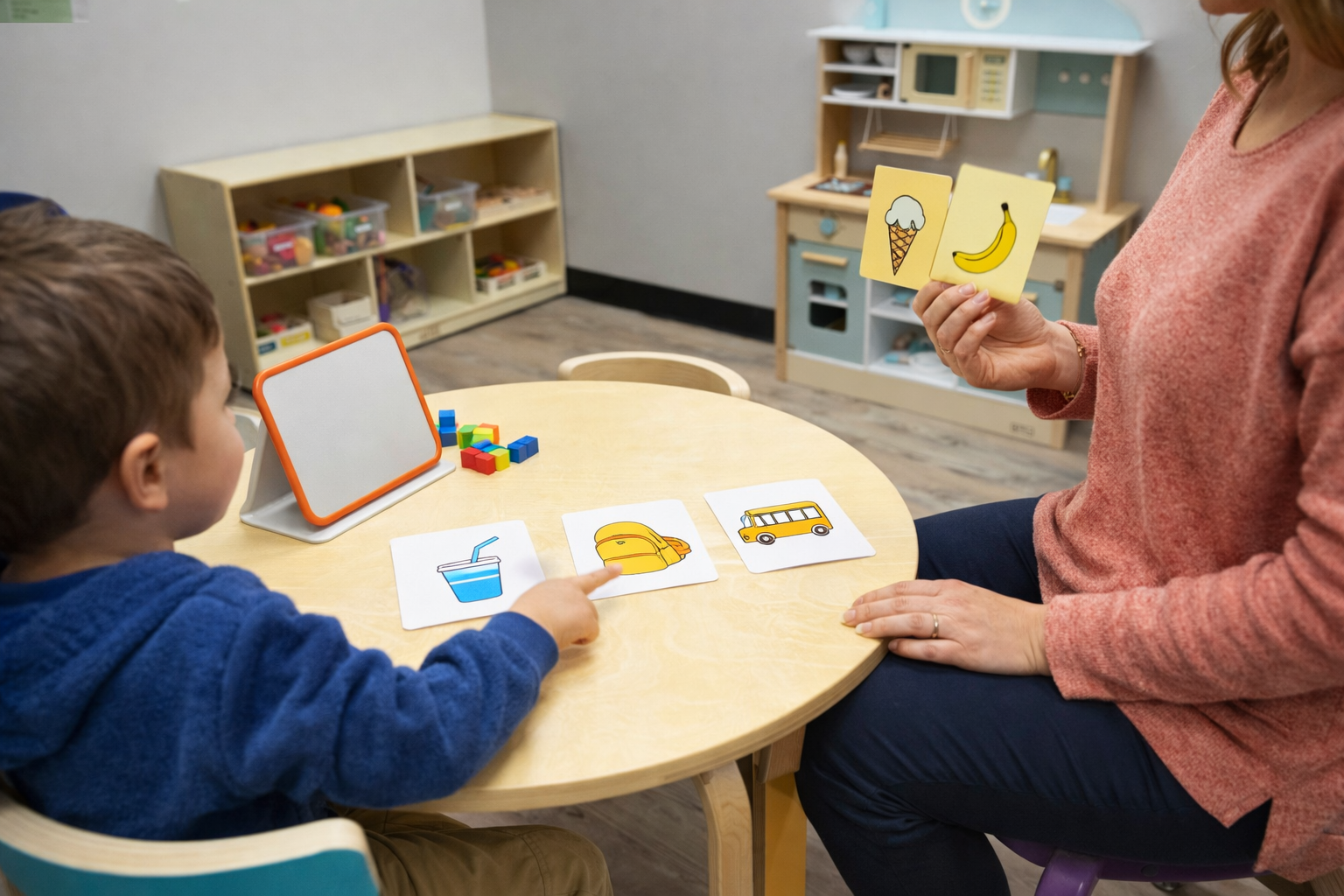
SPEECH THERAPY
Signs and symptoms
Pragmatic Language
Pragmatic language is the social aspect of communication and non communication tasks. Difficulties within social language may include: inconsistent eye contact, not responding to his/her name, not using gestures (hello/goodbye), interacting alone rather than with peers, making automatic comments, making jokes/idioms/abstract concepts that are more literal
Voice
Voice includes how our voice sounds or is perceived. Difficulties in this area may include a hoarse, breathy, or scratchy voice. The voice may also sound nasally as the sound is coming from the individual’s nose. The sounds /m/, /n/, and /ing/ are the only speech sounds that should come from the nose
Receptive and Expressive Language
Expressive and receptive language includes words that are expressed and understood. Difficulties with understanding and expressing language may be the first sign to talk to your child’s pediatrician for a request to see a speech language pathologist. Difficulties within language may include: delayed play skills, decreased use of facial expressions, word retrieval difficulties, decreased production of sounds, decreased babbling, not understanding simple directions/commands, saying only a few words, misnaming items, difficulties answering “wh” questions (who, what, where, why) or yes/no questions, or repeating words/phrases immediately or later in the day.
Fluency
Fluency is also known as “stuttering”. It is how well the speech process flows. Some disfluencies are typical, however disruption in the flow of speech can impact communication. If you feel like your child’s fluency is impacting their communication or if your child has negative feelings towards speaking/communicating due to their disfluencies, an evaluation with a speech language pathologist is recommended
Resources & Tips
Collaborative efforts to propose synopsis information was brought by the American Speech Hearing Association (ASHA) as well as the Brookside Pediatric team. Please reference the links below for more information in regards to speech and language for your child. However, please reach out to Brookside Pediatric for any other comments or concerns.